Early life
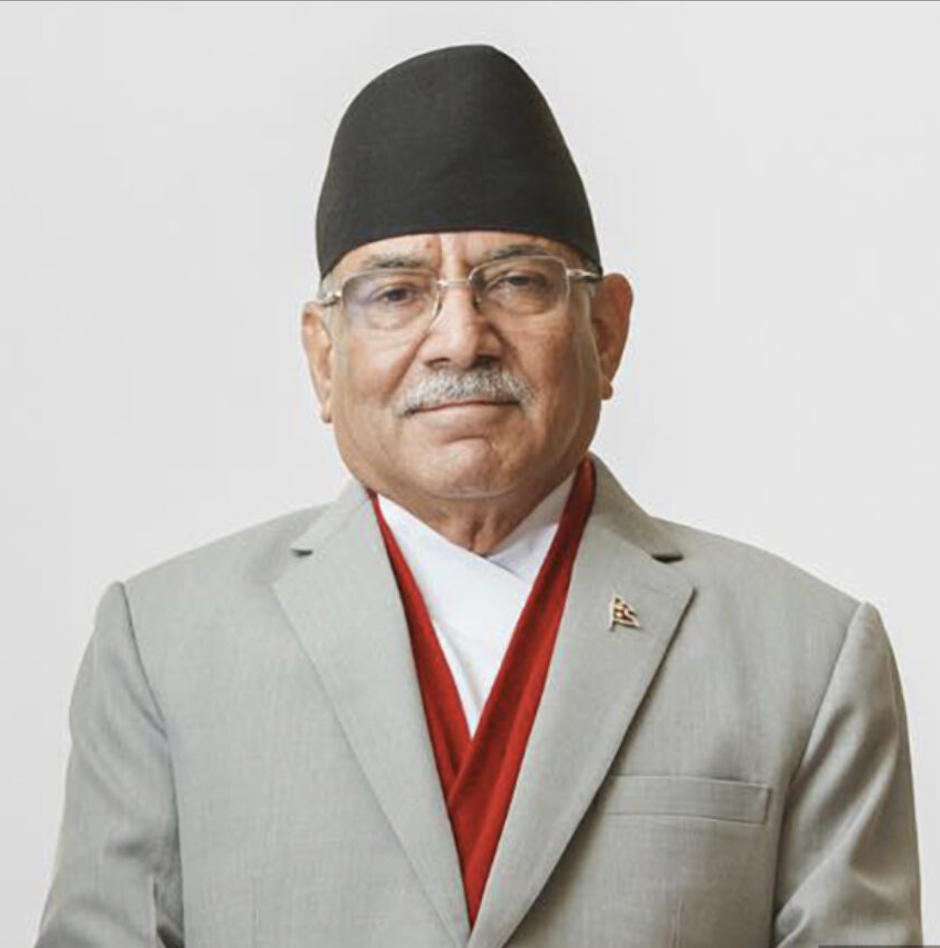
Rt. Honourable Pushpa Kamal Dahal ‘Prachanda’, the Prime Minister of Nepal, assumed the office for the third time on 26th December 2022. He won the vote of confidence in the House of Representatives on 10 January 2023 as almost all political parties supported him. Prachanda got historic 268 votes out of the present 270 members of the House.
Earlier, Prachanda served as the first ever Prime Minister of the Federal Democratic Republic of Nepal in 2008 to 2009 and for the second term from 2016 to 2017.
Currently he is also the chairman of Nepal Communist Party (Maoist Center) and a member of the House of Representative from Gorkha–2 Constituency.
The political career of Prachanda began early in 1972 as he got the membership of Nepal Communist Party Pushpalal Group. Later, in 1975 Prachanda along with Badal, Mitra Dawadi, Khem Bhandari and Pushpa Bhurtel established the Marxist Study Group. In 1978 he joined the Communist Party of Nepal (Fourth Convention) and was elected as Chitwan District Committee member of the party in 1980. Prachanda became a member of Regional Bureau as well as General Secretary of All Nepal Youth Association in 1982 and elected as the President of the organization in 1984.
The 5th General Convention of CPN Mashal in 1985 elected Prachanda as a central committee member. He became politburo member of the party shortly afterwards and General Secretary in 1990. Later in 1992 Prachanda became the General Secretary of CPN (Unity Center), the party that transformed to CPN Maoist and launched Maoist People’s War in February 1996 that played pivotal role in ending Nepal’s monarchy and established the country as a democratic republic. Prachanda led the People’s War as the General Secretary and later as the Chairman of the party and became the supreme commander of People’s Liberation Army of CPN Maoist.
Prachanda after three decades of his covert political life became public in June 2006 owing to the victorious people movement of April 2006 which was carried out by seven political parties together with CPN Maoist.
A comprehensive peace agreement was signed on 21 November 2006 between Prachanda and the then Prime Minister Girija Prasad Koirala, which concluded the decade-long Maoist Peoples’ War . The Peace Accord led to the monarchy being abolished and the declaration of Nepal as a federal democratic republic in 2008 through the Constituent Assembly.
Prachanda was elected as the Prime Minister of Nepal, on 18 August 2008 after the Unified Communist Party of Nepal (Maoist), emerged as the single largest party in the Constituent Assembly election. He served till 25 May 2009 for his first term.
Prachanda’s leadership and role was instrumental in the process of drafting Nepal’s new constitution, which was promulgated in September 2015. This constitution established Nepal as a federal democratic republic and laid the foundation for a secular, inclusive, and federal system of governance. The new constitution enshrined principles of social justice, human rights, and equality, and it recognized the rights and representation of various marginalized communities, including ethnic minorities, women, and Dalits.
Prachanda was elected as the Prime Minister for the second term on 4 August 2016 and served till 15 September 2017. His second time in the office remained crucial as the government successfully held the first ever local election after the new constitution and cemented the foundation of federal democratic republic system in the country. The other significant successes achieved during the 10 months term were execution of newly promulgated constitution, ending load shedding (power outages) and achieving economic growth above 7% among others.
Prachanda became an Executive Chairman of Nepal Communist Party (NCP), which was formed by unification of CPN (UML) and CPN (Maoist Centre) on 17 May 2018. After the Supreme Court’s verdict on 07 March 2021, ifying the unification of the two communist parties, Prachanda continued to serve as the Chairman of CPN (Maoist Centre). In January 2022, during the 8th Convention of CPN (Maoist Centre), he was re-elected as the Chairman of the party.
Prachanda has authored many books namely, Nepali Kranti ka Samasya (Problems of Nepalese Revolution, Vol. 1-4), Prachanda ka Chhaniyeka Rachana haru (The Selected Articles of Prachanda Vol. 1 and 2), Sanskriti, Kala Ra Saundarya Chintan (A Contemplation on Culture, Art and Aesthetics), Ganatantrako Pahilo Dashak (The first decade of Republic), Nayan Rajnitik Bisleshan (New Political Analysis), Nayan Yug Ko Padchap (Footprint of New Era), among others.
Prachanda holds Master’s Degree in Public Administration. He also has a Bachelor’s Degree in Agriculture from Rampur Agriculture Campus, Chitwan.
Born on 11 December 1954 as the eldest son of father Muktiram Dahal and mother Bhawani in Lewade village of Dhikurpokhari, Kaski District; Prachanda, originally named Ghanashyam Dahal, later changed his name to Pushpa Kamal Dahal during his matriculation examination. In his clandestine political years, Prachanda adopted various pseudonyms such as Kalyan, Biswas, Nirman, and Prachanda; however, he now embraces the latter as his preferred identity over Pushpakamal Dahal.
In 1983, Prachanda married Sita Poudel, who passed away on 12 July 2023. The couple, during their marriage, parented four children—Gyanu Dahal KC, Renu Dahal, Ganga Dahal, and Prakash Dahal.
Beyond his political engagements, Prachanda possesses a fervent interest in various pursuits, including reading books, writing, sports, music, and cycling.
| 2011 Mangsir 26 |
Born in Lewade, Ward No. 2, Dhikurpokhari VDC, Kaski District |
| 2026 |
Changed name from Chhabilal Dahal to Pushpa Kamal Dahal |
| 2026 |
Passed S.L.C. from Narayani Vidyamandir Secondary School, Shivnagar, Chitwan |
| 2027-2029 |
Studied I.S.C. at Patan Multiple Campus |
| 2031-2033 |
Completed B.Sc. in Agriculture from Rampur Agriculture Campus |
| 2038-2063 |
Underground |
| 2019 |
Moved from Dhikurpokhari - 2 to Shivnagar VDC, Bharatpur, Chitwan |
| 2026 Baisakh |
Married to Sita Poudel |
| 2029 |
Taught at Narayani Vidya Mandir Secondary School, Shivnagar |
| 2033 - 2035 |
Taught at Danda Secondary School, Nawalparasi, and Bhimodaya Secondary School, Arughat, Gorkha |
| 2028 |
Became a party member of Pushpalal Group of Nepal Communist Party |
| 2031 |
Formed Marxist Study Group |
| 2034 |
Entered the Fourth General Convention of Nepal Communist Party |
| 2036 |
Elected as Chitwan District Committee Member |
| 2038 |
Became a regional bureau member and the general secretary of the Central Committee of the All Nepal Youth Association |
| 2040 |
Elected as the Central President of the All Nepal Youth Association |
| 2041 |
Elected as a central member from the Fifth General Convention of Nepal Communist Party (Mashal) |
| 2042 |
Became a Politburo member of Nepal Communist Party (Mashal) |
| 2046 |
Became the General Secretary of Nepal Communist Party (Mashal) |
| 2048 |
Became the General Secretary of Nepal Communist Party (Unity Center) |
| 2051 |
After the third extended meeting following the First National Conference of the then Nepal Communist Party (Unity Center), the party was renamed Nepal Communist Party (Maoist), and Prachanda became the General Secretary of Nepal Communist Party (Maoist) |
| 2052 |
Led the People's War |
| 2057 |
Became the Chairman of Nepal Communist Party (Maoist) |
| 2069 |
Elected as Chairman from the National Conference held in Hetauda |
| 2070 |
Re-elected as Chairman from the Unity Convention held in Biratnagar |
| 2075 |
Following the party unity between Nepal Communist Party (UML) and Nepal Communist Party (Maoist Center) to form Nepal Communist Party (NCP), he became the executive chairman of the party |
| 2077 |
After the Supreme Court's decision on 23rd Falgun 2077, reverting Nepal Communist Party (UML) and Nepal Communist Party (Maoist Center) to their previous states, he became the Chairman of Nepal Communist Party (Maoist Center) |
| 2078 |
Re-elected as Chairman following the Eighth General Convention of Nepal Communist Party (Maoist Center) held in Poush |
| 2058 |
Supreme Commander of the People's Liberation Army, Nepal |

_sqa0ahq.jpeg)